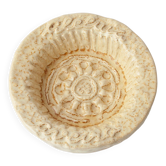
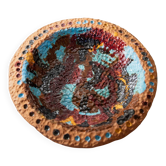
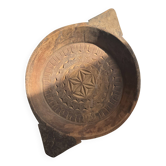
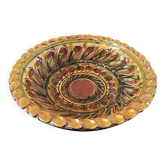
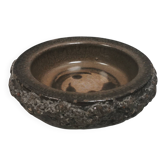
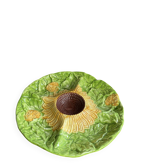
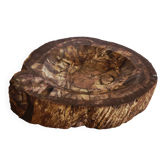
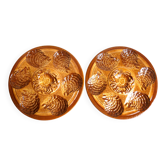
1970s Brown Textured Ceramic Ashtray from Aleluia

- Dimensions :
- H5 x W20 x D20
- Color :
- brown
- Material :
- ceramics, porcelain and earthenware
- Style :
- mid-century
Explore the allure of a brown ceramic ashtray from the 1970s, meticulously crafted in Portugal by Aleluia. This vintage Aleluia ashtray exemplifies the sophisticated artistry of textured ceramics, making it a distinctive piece for collectors and enthusiasts of retro décor. The rich brown hue and unique texture highlight Aleluia's attention to detail and craftsmanship, creating a functional yet stylish accessory for any space. Perfect for adding a touch of vintage elegance to your home or office, this 1970s ashtray serves as a conversation starter and a nod to Portuguese ceramic heritage. With no chips or cracks. Responsible for one of the most cosmopolitan decorative faience productions of the 20th century in Portugal, Fábrica Aleluia, Aveiro, has established itself through the modern inventiveness of its creations. Despite the notorious international influences, Aleluia managed, over the years, to create a set of production lines, with its own decorative grammar, clearly distinctive from the national and international contexts. In the first phase, the factory focused mainly on the technical quality of the painting, applied to structurally simple forms, often with classical roots. But, in the 50s and 60s, the shapes became sculptural, taking advantage of the asymmetry and fluidity of curved lines, as if they were living organs. Following the trends of Western ceramic design, unprecedented in Portugal, the originality of these pieces lies in the dialogue between the shapes and efficient graphics with strong colors, highlighting the details and accentuating the organicity of the volumes. The factory was founded in 1904 and reinvigorated in the 1950s, a time of profound regeneration of German industry, after the restrictions imposed by the War, ending up closing in 1999. Gerold & Co., which at the end of the 1930s had around 160 workers, in 1955, had already increased this number to 220, producing porcelain for electrical equipment and utilitarian and decorative obje.