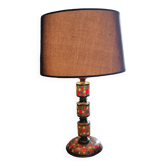
Lampe de table en céramique Bay Keramik Mid-Century moderne surdimensionnée, abat-jour en soie neuve

- Dimensions :
- H100 x W45 x D45
- Color :
- grey
- Material :
- ceramics, porcelain and earthenware
- Style :
- mid-century
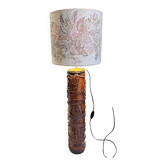
Remarkable West German ceramic table lamp signed Bay Keramik, characterised by a bright orange relief decoration on a matte grey ribbed pottery and an exceptionally tall architectural scale; recent wiring and custom grey silk shade, US plug with global adaptation available. This oversized table lamp is formed from an original Bay Keramik ceramic vase produced in West Germany in the mid-20th century and transformed into a lamp by Amitābha Studio. The base is exceptionally tall, approaching the scale of a floor lamp, offering a dominant architectural presence well beyond that of a typical table lamp. The cylindrical ceramic body is articulated by rhythmic horizontal bands alternating between finely ribbed matte grey glazing and bright orange relief decoration. The relief friezes feature stylised birds, star-like motifs, and dotted borders, expressing a bold graphic language characteristic of Bay Keramik's expressive post-war production. The contrast between the warm orange glaze and the cool grey background creates a strong visual tension and depth, accentuated by the vertical proportions of the lamp. To balance the intensity of the ceramic base, Amitābha Studio has paired the lamp with a custom cylindrical shade made of raw silk, woven in a soft grey with a subtle silver hue. The natural texture of the silk tempers the graphic decoration and allows the ceramic form to remain the focal point, whether lit or unlit. The brass fittings at the neck add a discreet metallic touch. The lamp has been professionally wired and is fully functional. The ceramic base has not been drilled or permanently altered; all modifications have been made using non-invasive methods. Well suited to Mid-Century Modern, Brutalist, or eclectic interiors, this piece works particularly well in spacious rooms where scale, material contrast, and sculptural form are essential.