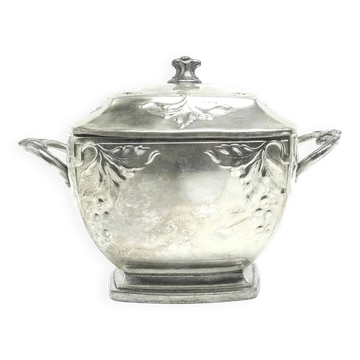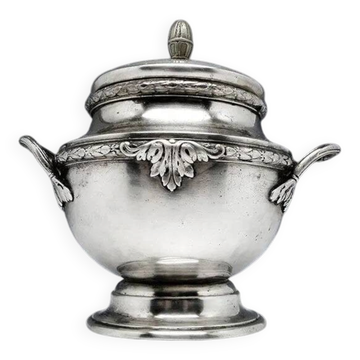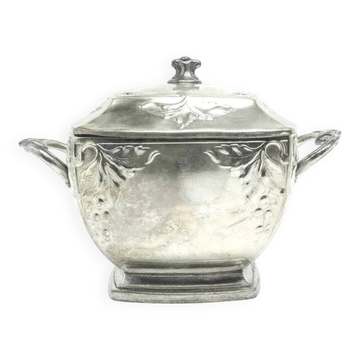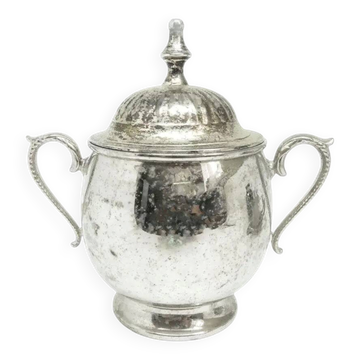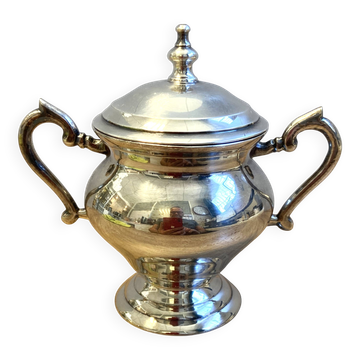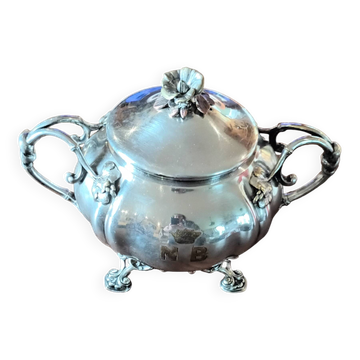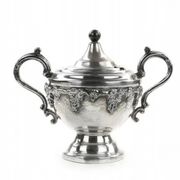
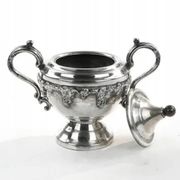
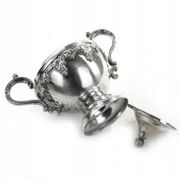
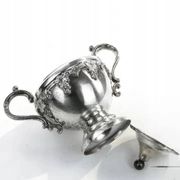
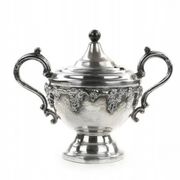
Art Nouveau sugar bowl, silver-plated brass, Germany, early 20th century
- Dimensions :
- H7 x W9 x D13
- Color :
- silver (Color)
- Material :
- silver-plated metal
- Style :
- art nouveau
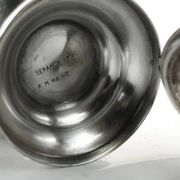
Art Nouveau style sugar bowl, produced at the beginning of the 20th century by the German company DBE (Dupper and Bernhold Alpacca Silver Plated), made of brass covered with silver. The construction is based on a spherical, smoothly modelled bowl placed on a round foot and two slender handles extending from the sides in organic lines. The silver-plated surface shows a varied texture: mostly matte, patinated grey, occasionally broken by shine on the handles and raised relief decorations. A decorative ring with plant and floral motifs—characteristic of the Art Nouveau era—encircles the upper part of the body. The surface of the sugar bowl shows natural signs of use: local abrasions reveal warm, golden tones of brass under the silver, and there are also small scratches and local darkenings. The lid is missing. The construction remains stable, with visible care in the attachment of the handles and the solidity of period craftsmanship. Condition: good, with original patina and authentic signs of age, without modern interventions. This sugar bowl clearly echoes the narrative of the early 20th century—a time when Art Nouveau broke conventions, drawing on themes from nature and freely shaping metal into soft, flowing lines. The matte silver and flashes of brass tell of bygone tea gatherings, candlelight reflecting on plant reliefs. Organic motifs wrapping the body evoke Art Nouveau posters and turn-of-the-century porcelain, bringing a distinct accent of history and craftsmanship to the interior. Subsequent layers of patina build a sense of authenticity—a record of daily rituals and changing aesthetic sensibilities. The sugar bowl can be paired with classic porcelain decorated with botanical motifs or simple ceramics, highlighting the detailed character of the item. It works well as a decorative accent on a console or chest of drawers, especially among cut glass or antique tableware. In eclectic collector arrangements, it will find company among other silver-plated vessels or crystal elements, and against dark wood and subdued fabrics, it will become a discreet but expressive point of conversation about design history. No additional technical data or detailed care instructions.
Sweet boxes & sugar bowls: other similar vintage pieces
Discover more similar items- -34%
- -62%
- -12%