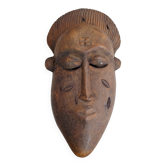
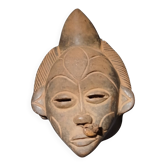
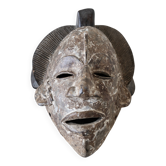
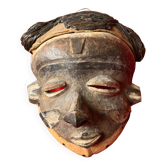
Ekpo mask

- Dimensions :
- H33 x W33 x D33
- Color :
- multicolour
- Material :
- wood
- Style :
- world's craft
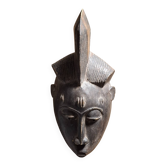
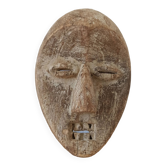
Mask from the Ekpo society of the Bini people, originating from the region of the Edo Kingdom, corresponding to present-day Edo State, southern Nigeria – 19th/early 20th century. An elegant anthropomorphic-zoomorphic mask representing the head of an antelope-man, with delicately lowered eyelids and a gaze symbolically turned towards the ground, giving the whole a deeply introspective and meditative expression. The open forehead is surmounted by a light, flat headdress supporting two slender antelope horns, a symbol of power and spiritual connection. Made of lightweight wood, covered with kaolin remnants and displaying a beautifully nuanced, ancient brown patina, this mask is distinguished by its remarkable lightness, an undeniable sign of great age and prolonged ritual use. Traces of internal wear attest to repeated handling during ceremonies. Worn during ritual dances of the Ekpo society, it combined human features and animal symbols to invoke protective spirits, regulate justice, and reinforce the group's moral authority. This mask has numerous points of comparison published in the literature on the arts of southern Nigeria. A very similar example is preserved and exhibited at the Dallas Museum of Art, highlighting the rarity and museum quality of this piece. Provenance: Formerly in the collection of Brent Ashabranner (1921–2016), former Deputy Director of the American Peace Corps, a major collector of tribal and Asian art, and a regular contributor to the journal Arts of Asia.