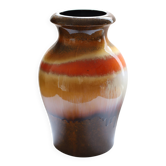
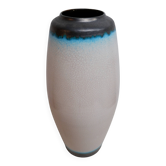
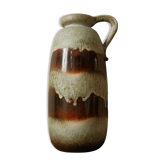
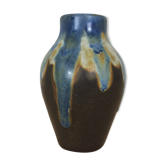
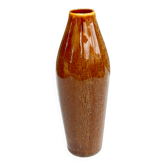
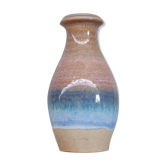
Mid-century modern vase, glazed ceramic, Spółdzielnia Milenium, Poland, 1970s

- Dimensions :
- H30 x W9 x D11
- Color :
- yellow
- Material :
- ceramics, porcelain and earthenware
- Style :
- mid-century
A ceramic vase from Spółdzielnia Milenium in Kraków, created in the 1970s, representing the Polish mid-century modern style in a studio version. The tall, slender form with a cylindrical cross-section is made from uniform glazed ceramic; softly rounded shoulders flow into a narrowing neck, finished with an irregularly turned rim. The two-tone glaze features a warm, honey-yellow shade blending organically into a deep, uniform brown at the base. The finish is highly glossy, with a distinct marbled effect reminiscent of glowing flames in the yellow part and a subtle waviness at the colour boundary. Decorative detail relies on experiments with texture and colour, typical of Polish ceramics from the 1970s; there are no additional ornaments or handles, and the base is flat. The surface has no cracks, chips, or visible signs of use, and minor imperfections highlight its handmade nature. Condition: very good, no damage, marks from the artisanal process. This vase carries the spirit of 1970s Poland—a time when the search for originality was expressed through experiments with colour and organic form. Its surface evokes shimmering light over the Vistula: vibrant yellow 'flows' over the ceramic like a ray through glass, while brown merges with the clay, recalling the warmth of the workshop. The understated yet expressive silhouette serves as a condensed story of post-war Polish utilitarian culture, where Kraków's craft tradition meets the bold geometry of mid-century design. In an arrangement, this vase can stand against light walls or beside a minimalist oak sideboard, creating a strong colour accent in a subdued space. It can be paired with other ceramic objects—bottle lamps from the era or simple plates in natural glazes—to build a mid-century collector's atmosphere. It fits well in an eclectic living room, dialoguing with both contemporary glass and classic Polish design from the 1960s–70s. It is worth combining with a simply shaped plant or leaving empty to emphasise its sculptural form. No technical data requires an individual approach to care—general recommendations for glazed ceramics include wiping with a soft, dry cloth and avoiding dishwasher washing or contact with harsh detergents. Its artisanal origin excludes repeatability—each piece has a unique colour arrangement and traces of manual work.