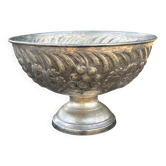
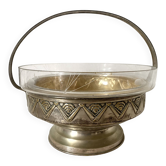
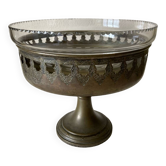
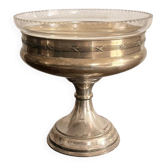
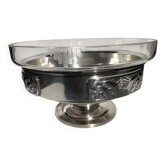
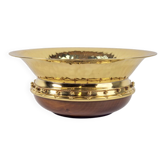
Neoclassical sugar bowl, glass, silver-plated brass, Denmark, 1930s

- Dimensions :
- H6 x W9 x D9
- Color :
- transparent
- Material :
- linen
- Style :
- classic
A sugar bowl from the 1930s, made of a basket of silver-plated brass and a glass insert, represents European tableware craftsmanship from the interwar period. The metal basket in a cool, darkened silver shade shows clear signs of patina with subtle, iridescent discolorations. The matte finish and visible oxidation effects emphasize the authenticity of the object. A decorative, raised band with a braided weave wraps around the lower part of the basket, creating a classic decorative accent. The glass insert is thick, cylindrical, with the upper edge decorated with a series of regular, semicircular indentations, giving it a wavy, rhythmic character. The proportions are balanced and the construction is solid – the glass element fits well into the metal frame. Condition is good: the metal shows signs of patina and minor abrasions, but there are no major damages or dents; the glass remains free of cracks and chips. The form of this sugar bowl recalls the spirit of the 1930s, when neoclassicism in European homes was manifested through details drawing from antiquity, but presented in a functional, everyday form. The cool shine of silver-plated brass speaks of the dignity and calm of the tables of the time, while the braided ornament suggests subtle symmetry and timeless attention to detail. The glass insert with a wavy rim reflects light, creating a delicate play of shadows on the tabletop, as if the object itself is waiting for the afternoon tea ritual. The sugar bowl can be displayed on a classic tray of enameled metal or porcelain, accompanied by cups with a simple, geometric pattern and small silver spoons. It will work well both on an elegantly set table in an art deco or neoclassical dining room, and as a single accent on a console in the living room, where its patina and decorative weave will contrast with modern surfaces. It is worth combining it with other items from the first half of the 20th century – glass cake stands, crystal decanters or porcelain with geometric decor – to bring out its historical connotations and introduce a noble tone of old European homes to the interior.
Sweet boxes & sugar bowls: other similar vintage pieces
Discover more similar items