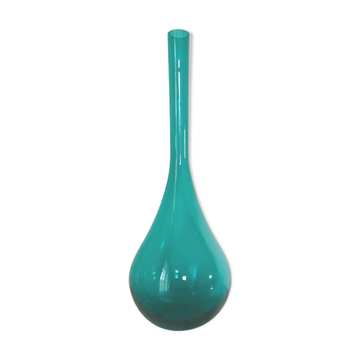
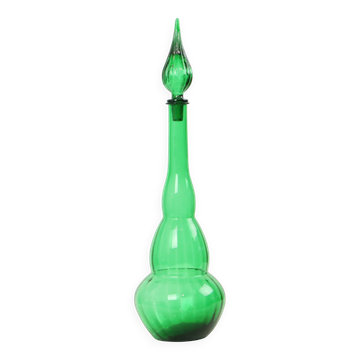
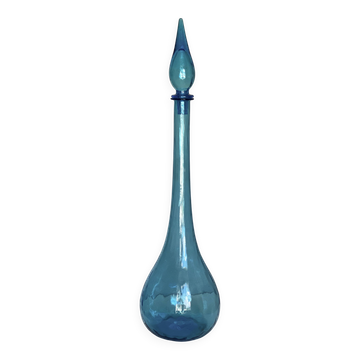
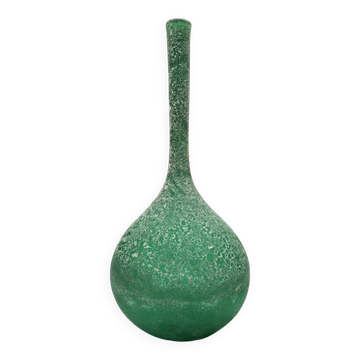
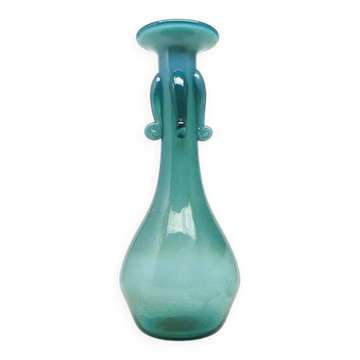
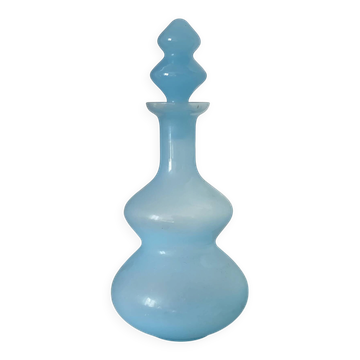
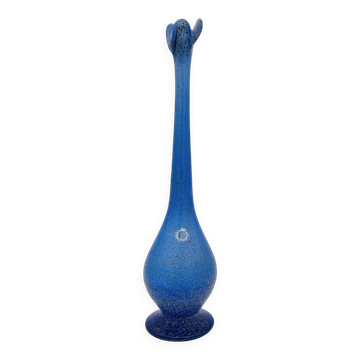
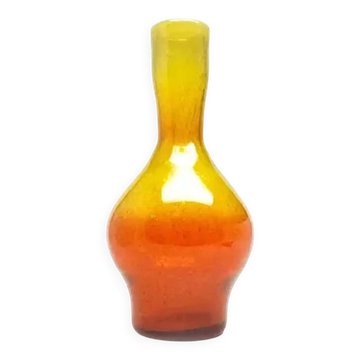
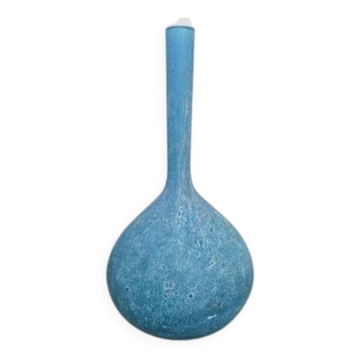
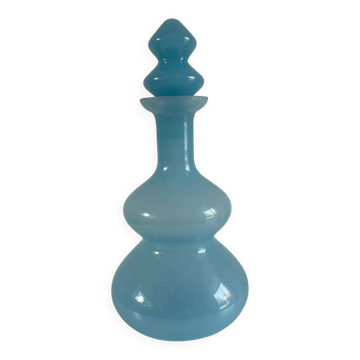
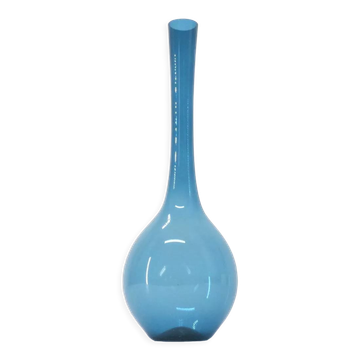
Modernist vase, turquoise glass, designed by J. Słuczan-Orkusz, Poland, 1970s

- Dimensions :
- H33 x W12 x D16
- Color :
- turquoise
- Material :
- concrete
- Style :
- modernist / bauhaus
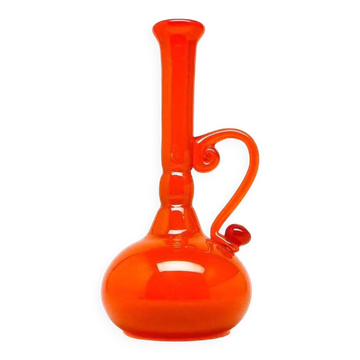
A vase designed by Jerzy Słuczan-Orkusz, created at the Krakow Glass Institute in the 1970s, representing modernist explorations of new forms and colours in Polish utility glass. The vessel is made of hand-blown glass in an intense turquoise shade, complemented by a subtle tonal depth effect at the base. The surface is highly glossy and smooth, without patterns or additional decorations. The construction is distinguished by a massive, spherical base that smoothly transitions into a long, narrow chimney, ending in a three-step sequence of spherical bulges. The proportions reveal inspiration from modernist experimentation and create an innovative silhouette. The side of the neck is decorated with an asymmetrical arrangement of three glass rings and a medallion, emphasising the sculptural nature of the design and organic associations. The vase is currently missing one of its handles, while the other is partially lost, and the breakage points remain visible. The condition is described as worn, but the item retains full functionality and authenticity of all visible elements. This vase speaks with the voice of Polish modernism of the 1970s — its form conveys the daring experiment and boldness expected of glass designers of the era. The intense turquoise, gloss, and fluid, irregular transitions of proportions suggest a dialogue with abstraction and a fascination with light and transparency, which was a hallmark of the decade. The characteristic 'bubbles' on the neck and irregular side accents speak of individualism, material honesty, and the courage to treat every imperfection as part of the vessel's creative biography. The losses are both a trace of the passage of time and a sign of life – confirming both the age and authenticity of this collector's object. The vase can be combined with other examples of 1960s–70s glass, decorated with a single branch, or left as a standalone sculptural accent on a light wood chest of drawers or a bent metal sideboard. It should fit well in a living room arranged in a collector's, modernist, or eclectic spirit – with wall art, graphics, and raw textiles. Pairing with low ceramics or graphite glass will emphasise its unique colour; it can also be displayed against a neutral wall or smooth concrete, allowing the light to bring out the depth of colour and organic form. No detailed technical or dimensional parameters are provided. Care is advised when cleaning, due to the handmade nature and the presence of damaged decorative rings. All elements visible on the vessel are original, with no restoration or repairs carried out.