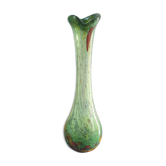
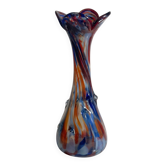
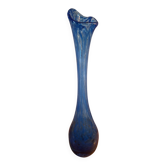
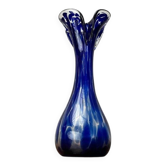
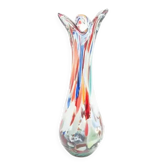
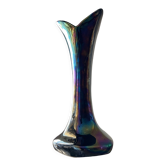
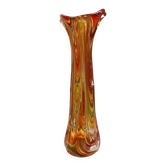
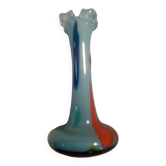
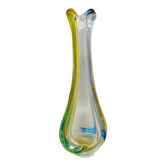
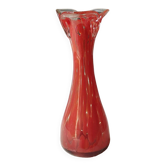
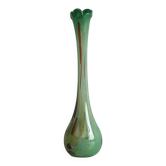
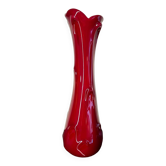
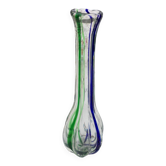
Sekacz vase, modernism, glass, Poland, 1970s

- Dimensions :
- H28 x W11 x D11
- Color :
- multicolour
- Material :
- glass and crystal
- Style :
- modernist / bauhaus
The 'Sekacz' vase from the Polish Hortensja glassworks is a representative example of modernist utility glass from the 1970s. Handcrafted using the blowing technique, it features a tall, irregularly elongated silhouette with a massive rounded base, pierced through with two oval perforations. This base balances the gently undulating, slender neck, which at the top splits smoothly into two lines. The glass is celadon-transparent, enriched with dynamic streaks of orange, red, cobalt, amber, and turquoise, freely mixing in a unique arrangement on the surface. The absence of additional applications or fittings emphasizes that the entire aesthetic is based on material and colour. The shiny, hand-polished surface highlights the play of light and the organic, subtle irregularities of shape typical of blown glass. The vase is in very good condition – no cracks, chips, or signs of repair. The natural patina of the era is intact, and the surface shows only minor, barely visible signs of age. The form and colour scheme of this vase speak with the voice of Polish modernism of the 1970s, when artistic glass became a space for experimentation and freedom in design. The dynamic, flowing bands of colour evoke the free painterly gesture – here the material itself forms an image, both decorative and individual. The oval perforations in the base lift the body, as if it gains lightness despite its mass, while the elongated neck spreads out like a plant with an expressive habit. This sculptural vessel tells a story about the search for harmony between the element of glass and the craftsman's control, leaving room for breath and light. This vase can be displayed on a dark wooden sideboard or a modern table, where natural light reveals the depth of colours and the transparency of the glass. It is worth pairing it with minimalist ceramics or abstract graphics to emphasize the architectural nature of its form. Placed next to other Polish glass objects from the 1960s and 1970s, it brings an organic rhythm and a touch of sculptural character, which will work both in mid-century modern arrangements and in collector's, eclectic interiors inspired by post-war modernism.