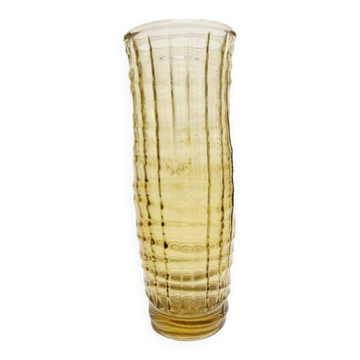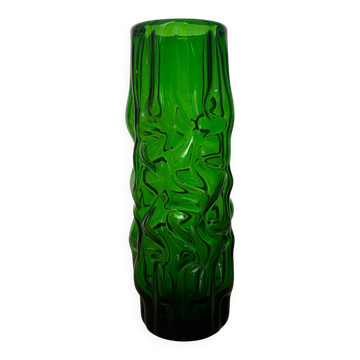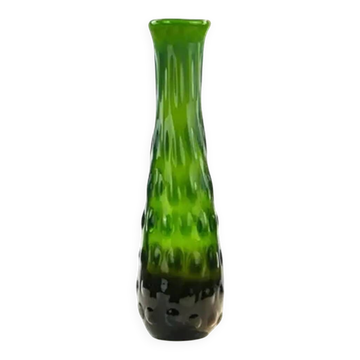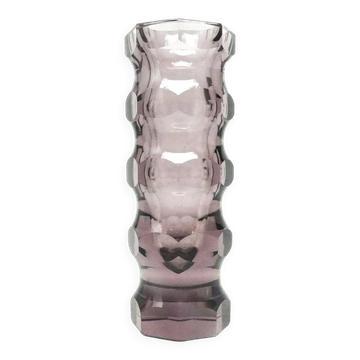
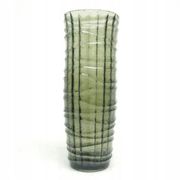
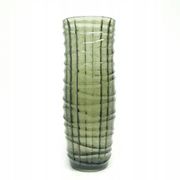
Baleron vase Modernism, transparent glass, HSG Ząbkowice, Poland, 1970s
- Dimensions :
- H21 x W8 x D8
- Color :
- transparent
- Material :
- linen
- Style :
- modernist / bauhaus
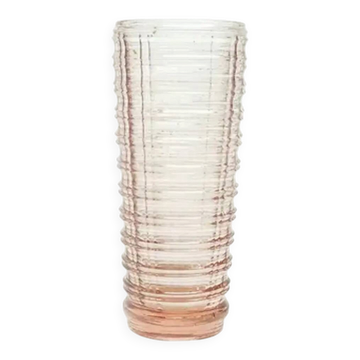
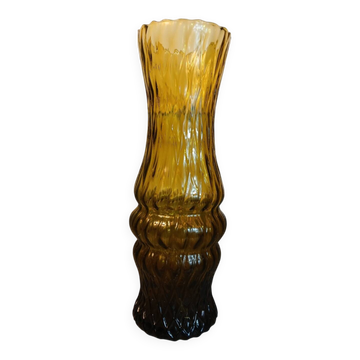
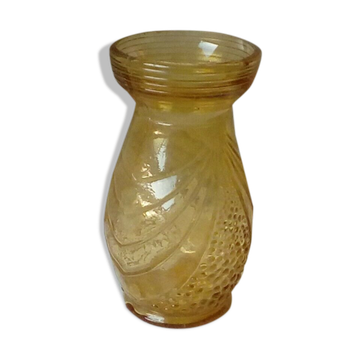
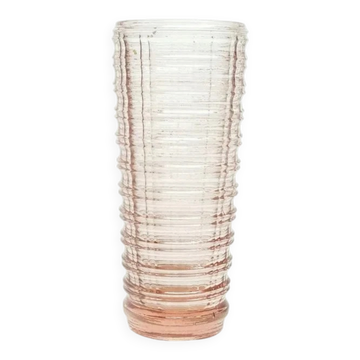
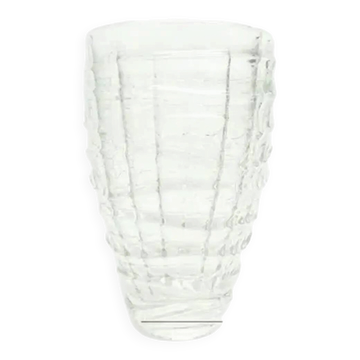
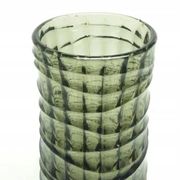
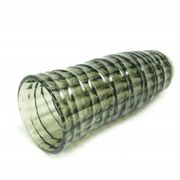
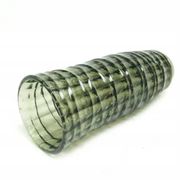
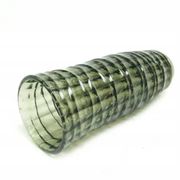
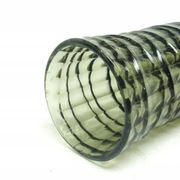
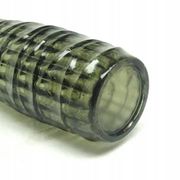
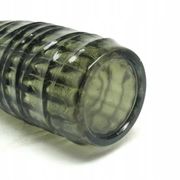
The 'Baleron' vase is an example of Polish utility glass from the 1970s, produced by the Ząbkowice glassworks according to a design by Jan Sylwester Drost. Made of pressed soda glass in a transparent, cool grey-green shade with an olive note, it combines the thickness and solidity of the material with refined edges and smooth rims. The vase's body takes on a slightly narrowing cylindrical shape towards the base, subtly widening towards the top. Characteristic, regular vertical grooves are interrupted by horizontal notches, creating a rhythmic, three-dimensional decorative motif reminiscent of a sliced baleron – from which the popular name of this form derives. The surface is semi-glossy, uniformly maintained throughout the object. The aesthetics fit into the modernist, minimalist forms of Polish design from the 1970s, balancing functionality with decorativeness. The vase is in very good condition, with almost no visible signs of use or aging; no cracks, chips, or repairs, and the finish is fully original. The vase speaks with the voice of the Polish modernist era, when the rawness of the material and simplicity of form were balanced by subtle details and an organic rhythm. Its texture tells the story of how geometry could gain softness through repetition and an oval line, and through the transparent mass of glass, streaks of light penetrate, creating a slightly cool, restrained mood. This is an object that remembers the times when designers sought to find beauty in everyday life – forming objects that are stable, harmonious, and at the same time ready for a discreet play with their surroundings. It can be displayed on a minimalist console or wooden tabletop, where light will highlight the rhythmic grooves and the shade of the glass. The vase will fit well in both mid-century modern and contemporary, subdued interiors – it can be combined with metal, porcelain, as well as with a single branch or a composition of dried grasses, allowing the shape and colour of the glass to take centre stage. In the company of geometric graphics or substantial 1970s ceramics, the vase will complement a collector's display, emphasising the dialogue of eras. No additional technical data or care recommendations. Due to the thickness of the glass and the embossed structure, it is advisable to clean it with a soft cloth and avoid strong chemicals.