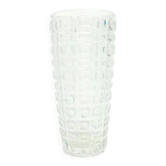
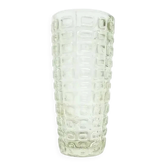
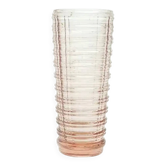
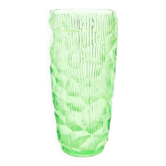
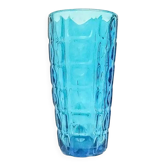
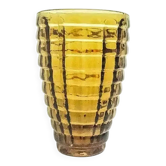
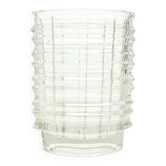
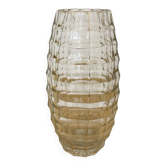
Optical vase, modernism, glass, Ząbkowice, Poland, 1970s

- Dimensions :
- H18 x W12 x D12
- Color :
- transparent
- Material :
- glass and crystal
- Style :
- modernist / bauhaus
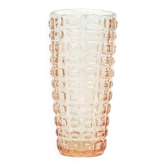
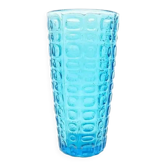
The 'Optical' vase produced by HSG Ząbkowice in Poland in the 1970s is an example of modernist utilitarian design from the PRL era. Made of transparent pressed glass with a cool hue, it stands out for its proportions and architectural form: a gently flared upper edge contrasts with a subtly narrowed base. The decoration consists of distinct, horizontal optical stripes regularly encircling the body, and vertical, narrow grooves that enhance the prismatic effect of light splitting and reflection. The surface is smooth, but perceptible protrusions introduce a varied texture, especially visible under stronger lighting. The vase was made without visible seams or joints, demonstrating the high level of industrial glass craftsmanship of the 1970s. Its condition is described as very good – no chips, cracks, or repair marks, and the whole piece presents as collectible. The vase's form resonates with the spirit of Polish modernism, when everyday objects were meant not only to serve but also to organize space through light and rhythmic patterns. The object seems to whisper about the aesthetics of mature modernism, where function and decoration meet in the logic of industrial processes – the vase masterfully uses the possibilities of pressed glass, turning it into a backdrop for the play of lights and reflections. Its presence is a reminder of times when the nobility of form stemmed from precision craftsmanship, and optical finesse expressed the cultural panorama of Central and Eastern Europe in the mid-20th century. In arrangements, this vase can be paired with geometric vessels in stronger colours to highlight its minimalist, graphic character. It is best displayed solo on a walnut wood sideboard, next to books or graphics with modernist inspirations. Mid-century modern, collector, or minimalist interiors will appreciate its expressive, luminous accent – it is worth combining it with accessories with simple patterns or smooth textiles to make the vase a subtle but visible motif in the composition. No detailed technical data or care instructions are provided, but the smooth, pressed surface makes it easy to keep clean. The lack of dimensions prevents providing exact parameters of the object.