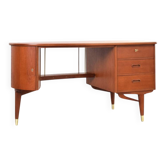
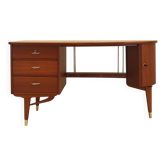
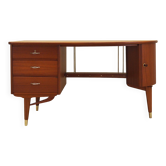
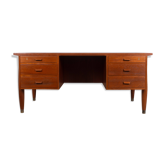
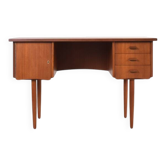
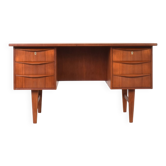
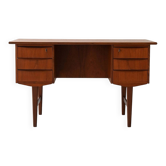
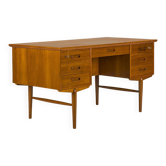
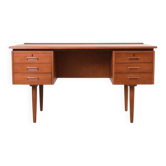
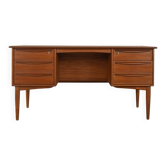
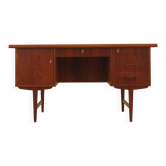
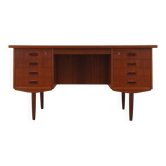
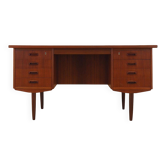
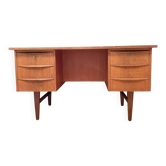
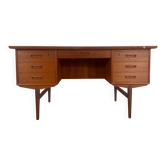
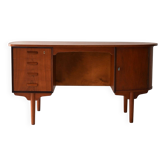
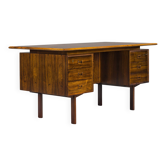
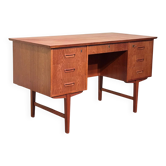
Mid-Century Organic Teak Desk from Sola Møbler, 1960s.
This item has found its owner, but other one-of-a-kind items await you. 👇
Discover similar items- Dimensions :
- H73 x W130 x D72
- Color :
- wooden
- Material :
- teak
- Style :
- scandinavian
Teak desk model 111, produced by the Norwegian company Sola Møbler in the 1960s, is an excellent example of Scandinavian design where functionality is combined with a light, organic form. The piece stands out through its distinctive softly shaped desktop and subtly sculpted details typical of Nordic modernism from the period. The desk is crafted from teak wood with a warm tone and elegant grain. One of its most characteristic features is the construction with two storage cabinets, including a rarer semi-circular unit that gives the piece a softer, more architectural appearance. This detail clearly distinguishes the desk from the more geometric Scandinavian designs of the era. The piece has been professionally and carefully restored by removing old coatings, staining and finishing with varnish. The restoration was carried out by a talented and experienced carpenter with over 20 years of experience. Thanks to these treatments, the desk looks stunning and will serve its new owner for many years without fear of damage or wear from everyday use. Model 111 was designed with everyday functionality in mind. The spacious top provides a comfortable working area, while the enclosed storage compartments help maintain a clean and organized workspace without compromising the visual lightness of the structure. The desk is also well finished on the back, allowing it to be placed freely within a room rather than only against a wall—an important feature of higher-quality Scandinavian desk design from the 1960s. Its form remains restrained without feeling overly strict. The organic lines soften the minimalist character of the piece, allowing it to fit naturally into both contemporary interiors and vintage-inspired spaces. It is the kind of furniture that attracts attention through proportion, craftsmanship, and thoughtful design rather than excessive ornamentation. Sola Møbler was among the Norwegian manufacturers contributing to post-war Scandinavian modernism, focusing on high-.
4.98 ()