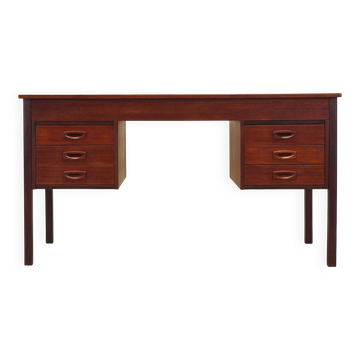
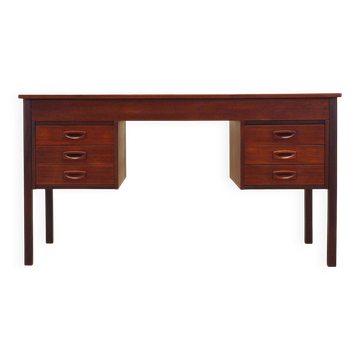
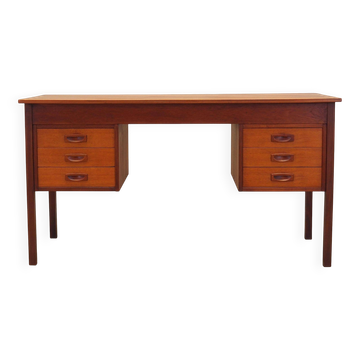
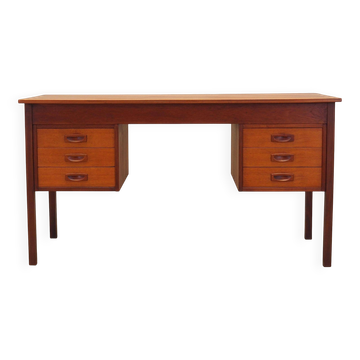
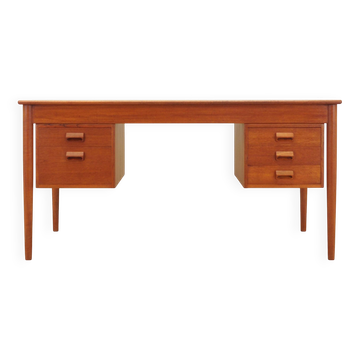
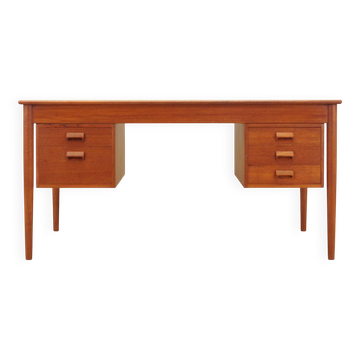
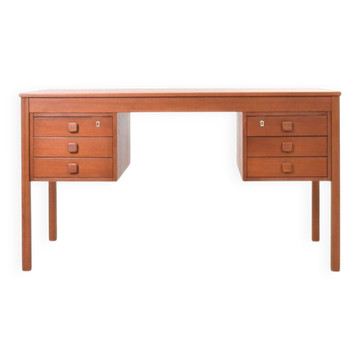
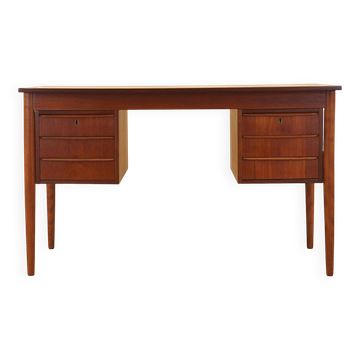
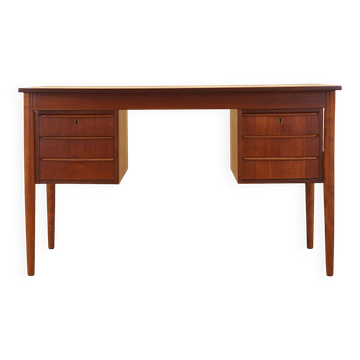
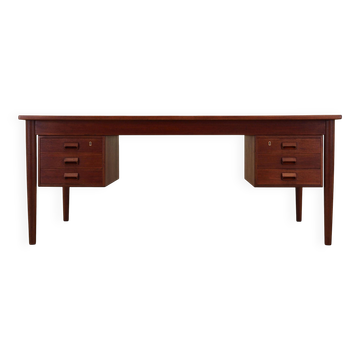
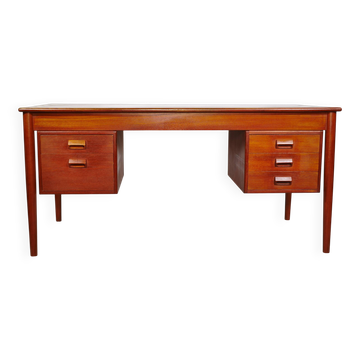
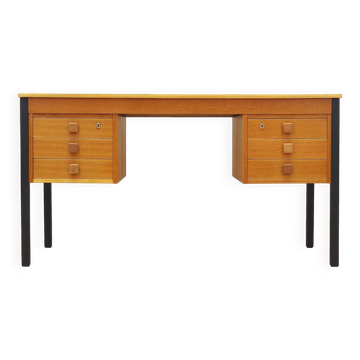
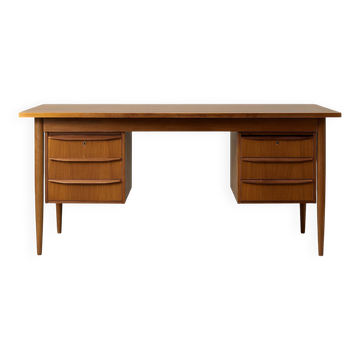
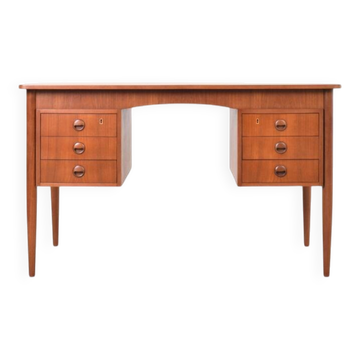
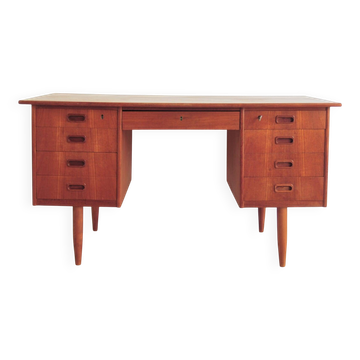
Danish teak veneer executive desk with eight drawers, 1970s

- Dimensions :
- H73 x W136 x D60
- Color :
- brown
- Material :
- wood
- Style :
- scandinavian
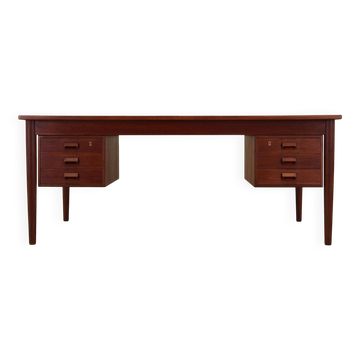
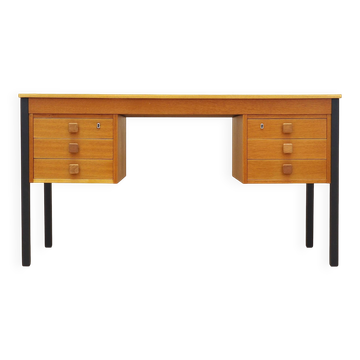
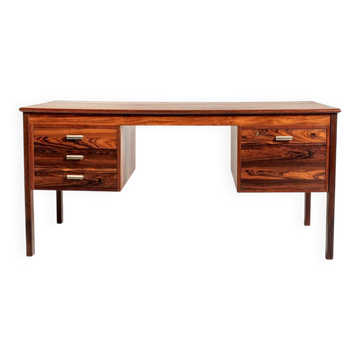
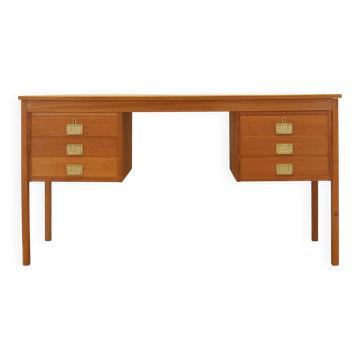
A Danish desk from the 1970s, representing the mature phase of Scandinavian modernism. Teak veneer covers the entire structure, lending it the warm, cohesive character typical of the finest furniture from this era. The symmetrical layout with twin drawer banks creates a classic executive desk form that served equally well in office environments and private studies. The construction follows a straightforward yet considered geometry. Two drawer units flank the knee space, leaving comfortable clearance for seating. All eight drawers feature recessed pulls carved directly into the wooden fronts — a solution that eliminates protruding hardware and reinforces the minimalist aesthetic. The smooth tabletop rises from solid wood legs that anchor the entire piece with reassuring stability. The veneer finish maintains visual continuity across the top, sides, and drawer faces. The 1970s marked a period when Danish furniture makers brought refined design solutions to broader production. Desks of this type emerged to meet changing work patterns — growing paperwork, the need for organised space, and longer hours spent at the desk. Danish manufacturers combined proven craft methods with streamlined production, delivering solid, functional furniture at more accessible prices than the previous decade had allowed. This desk works well as a primary workspace in a home office or study. Eight drawers provide ample room for sorting documents, supplies, and small items while keeping the writing surface clear. The gap between drawer banks accommodates a standard office chair, and the desktop depth offers space for a laptop or monitor with keyboard. The piece is in good condition, showing minor scratches and small chips consistent with period use. Small losses have been filled during restoration. The more noticeable traces of use are also documented in the photographs, so that the actual state of preservation is conveyed as faithfully as possible.
4.93 ()
Desks: other similar vintage pieces
Discover more similar items- -15%
- -15%
- -15%
- -15%
- -15%
- -15%
- -30%
- -15%
- -15%
- -15%
- -15%
- -15%
- -15%
- -15%
- Sold out
- -30%
- -10%
- -15%