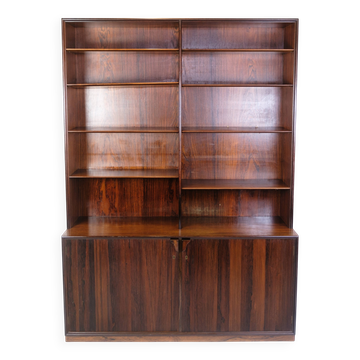
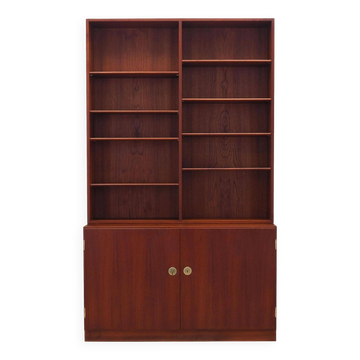
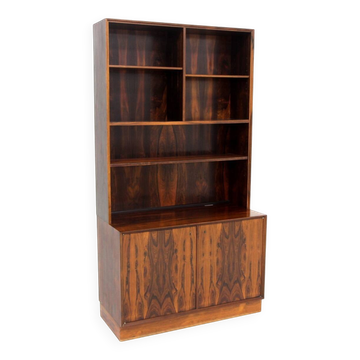
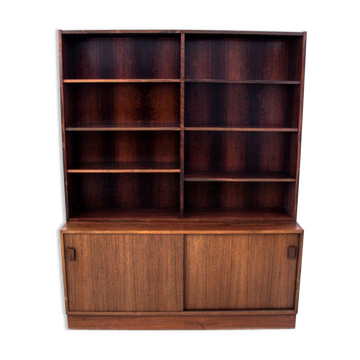
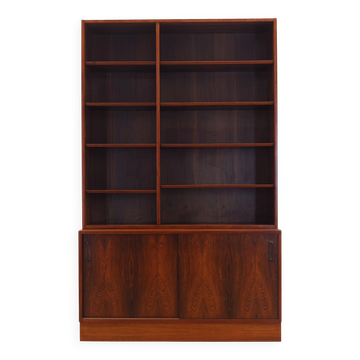
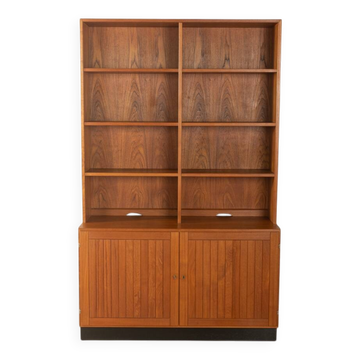
Rosewood shelving unit by Svend Langkilde for Langkilde Møbler, Denmark, 1970s

- Dimensions :
- H176 x W149 x D51
- Color :
- brown
- Material :
- rosewood
- Style :
- scandinavian
Danish shelving unit designed by Svend Langkilde in the 1970s, produced by Langkilde Møbler. The piece combines the stately presence of a bookcase with the practicality of a cabinet base, creating a complete storage and display solution. Rich rosewood veneer in deep, warm tones emphasises the precision of Danish furniture craftsmanship. The construction divides into two functional zones that balance each other harmoniously. The lower section forms a closed cabinet fitted with doors featuring circular recessed pulls — a solution characteristic of Danish design, where form serves function without superfluous decoration. The upper section accommodates nine adjustable shelves that can be repositioned to suit items of varying heights. The entire piece rests on a low plinth base, visually lifting the substantial form and lending it an air of lightness despite its considerable dimensions. The 1970s in Denmark marked a period of maturity for Scandinavian modernism, when design principles developed over previous decades had become established canon. Danish manufacturers combined artisanal quality with considered functionality, and rosewood remained among the most prized finishing materials. The Danish Furniture Makers Control mark on this example confirms that the piece passed rigorous quality inspection — a distinction reserved exclusively for items meeting the highest standards of Danish cabinetmaking. This shelving unit works equally well in a living room, study or home library. The closed cabinets accommodate documents, albums and everyday items, while open shelves provide space for book collections, ceramics or personal objects. The depth of over fifty centimetres allows larger formats to be stored comfortably. The piece is in good condition, with minor scratches and small marks from use over the years. Slight losses have been professionally filled. The more noticeable traces of use are also documented in the photographs, so that the actual state of preservation is conveyed as faithfully as possible.
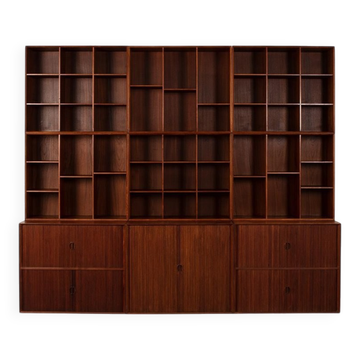
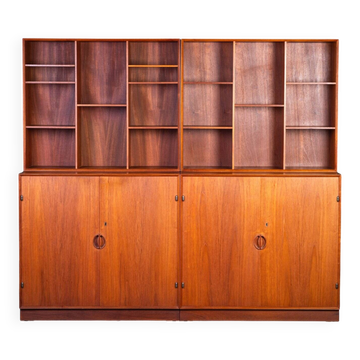
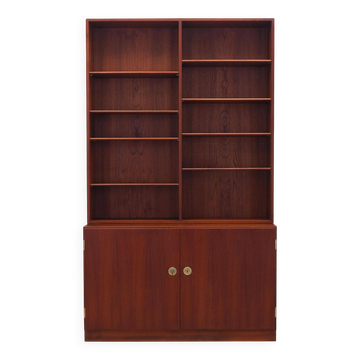
Bookcases: other similar vintage pieces
Discover more similar items- -11%
- -15%
- -15%
- -15%
- -10%
- -10%
- -15%
- -15%
- -15%
- -10%
- -10%