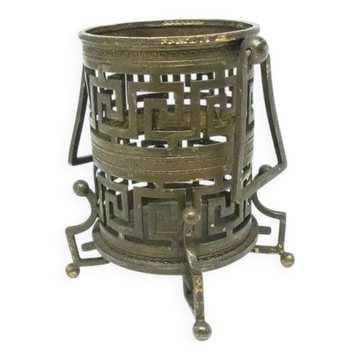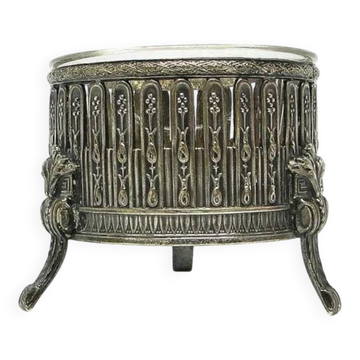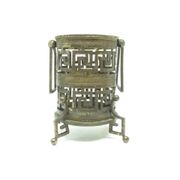
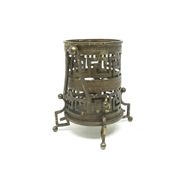


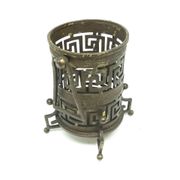
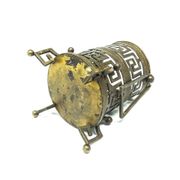
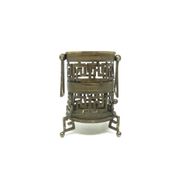
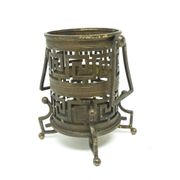
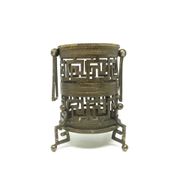
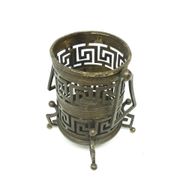
Empire vase, metal, France, 19th century
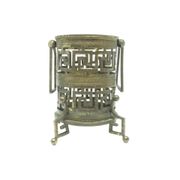
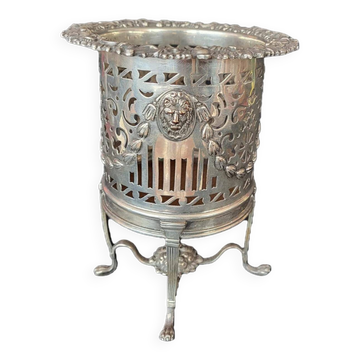
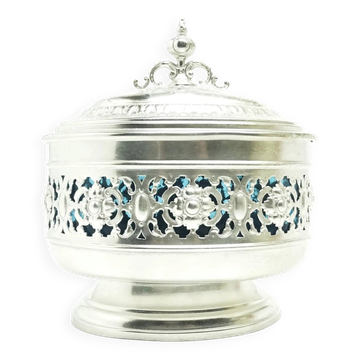
An Empire-style vase from 19th-century France features a compact construction made of metal—most likely brass or bronze—with a cylindrical body and monumental form. Its surface has a dark, patinated bronze finish with numerous gilded areas. The decoration is based on a regular, openwork Greek meander pattern that wraps around the entire form, complemented by three strongly defined, geometric legs ending in small balls. Vertical, angular handles further reinforce the expressive, neoclassical character. The texture is matte, with natural patina and delicate scratches, clearly emphasizing the authenticity of this antique object. The whole piece is in very good condition: there are no signs of modern interventions or repairs; only subtle signs of use and the original, irregular patina typical of unrestored period items are present. The vase's form evokes the nobility of French Empire: the geometric discipline of the meander ornaments and the strict symmetry of the legs tell the story of an era inspired by antiquity, expressing the constructive power of order and dignity. The surface, which has developed a natural patina over the years, seems to whisper about past ceremonies and salon gatherings, where refinement and monumentality defined the status of the interior. The gilding, worn in places, catches the light in brief reflections, as if repeating the story of time captured in metal. Such a vase works well as a striking accent in a classic living room, especially placed on a marble console table, chest of drawers, or a low étagère in the Biedermeier spirit. It can be combined with other period decorations—such as a mantel clock on a marble base or a pair of candelabra—to emphasize the historical continuity of the interior. In modern arrangements, it is worth placing it against a neutral background or among noble materials such as polished wood or silk fabric, which will highlight the neoclassical, architectural detail. Due to its openwork construction, it is best displayed as a container for dried grasses, branches, or single, graphic plant compositions.