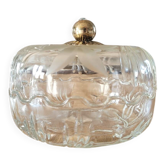
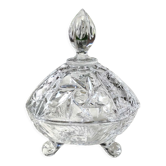
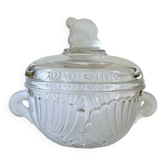
1930s Antique Bohemian Glass Bonbon Dish, Hand blown & painted, Art Deco

- Dimensions :
- H11 x W11 x D8
- Color :
- transparent
- Material :
- glass and crystal
- Style :
- art deco
Early-1930s Antique Bohemian Glass Bonbon Dish, Hand Painted, Art Deco, Pot-ash; Description: This elegant hand-painted glass dish comprises two elements: lid and bowl. The glass is Bohemian pot-ash lime blown glass, and it has been painted using enamel. It is 11cm (4.4 inhes) high and 11.5cm (4.6 inches) wide. It weighs 330 grams, with the lid being the heavier part. Context: In the early-1930s some Bohemian (formerly Czechoslovakia, now Czechia) glass makers were heavily influenced by the Art Deco movement, while concurrently heavy crystal work was popular. This piece was made with potash glass (for which Bohemia was famous) rather than lead crystal, thereby enabling the maker to blow a relatively thin and delicate form. The walls of this object are only 2.5mm thick, but the glass is incredibly strong – potash glass is distinguished by its surprising resilience and strength, offering durability in a remarkably thin form. This is a sturdy object that has survived nearly 100 years unharmed and unblemished – it is in excellent condition. Both the bowl and the bubbled grip retain their pontil marks (filed, but entirely evident), showing where the maker cut his rods. Throughout, there are minute bubbles suspended within the original glass beneath the painted ones and throughout, which renders this fish bowl such a perfect and inherent marriage of substance and theme. Comment: The prettiness in design and execution of subject – three golden fish happily diving through their watery lid dimensions above the seaweeds of the bowl– display a marvellous moment of delicacy and elegance. The craftsmanship, although unattributed, is entirely consistent with Haida (in technique, form, size, theme and substance) is supreme and has aged wonderfully. Although the original 1930s label of importation is now missing (see photos), there is no doubt of both its heritage and authenticity as Bohemian, and of around the year 1930 (the importation label did not specify a date).
Sweet boxes & sugar bowls: other similar vintage pieces
Discover more similar items- -60%
- -14%
- -15%
- -15%